Finding a Better Way to Treat Chronic Pain in Veterans
A new study finds that an interdisciplinary, individualized approach to pain management, including coaching support and health goal planning, may reduce the impact of chronic pain on veterans. The findings were published in the journal JAMA.
Chronic pain, defined as pain lasting more than three months, affects up to 40% of veterans—about twice the rate seen in the general population, says William Becker, MD, professor of medicine (general internal medicine) at Yale School of Medicine. It can result from injuries sustained in combat and can be compounded by mental health issues, such as post-traumatic stress disorder.
For the past two decades, the U.S. Department of Veterans Affairs (VA) has prioritized improving chronic pain management for veterans, according to Becker. “The VA was one of the first health systems to realize that treating chronic pain with opioids doesn’t work well and that unmanaged pain contributes to addiction,” he says. “So in 2016, they established nonpharmacological treatment at all VA centers through a whole health team intervention that provided integrative therapies.”
Our study supports the VA’s investment in this whole health model of care and shows that providing people with an array of tools is better than our standard treatment.
William Becker, MD
To evaluate this holistic approach, Becker, in collaboration with Karen Seal, MD, of the University of California, San Francisco, and colleagues, conducted the first randomized trial to test its effectiveness against other models of care.
For the study, the researchers assigned 764 VA patients with chronic pain to one of three groups: a whole health team intervention, cognitive behavioral therapy in a group setting, or usual care. The whole health team, which included a wellness coach and a clinician trained in integrative therapies, considered each patient’s personal values and life goals.
The researchers found that after 12 months, the whole health model led to a significant improvement in pain interference—the extent to which pain disrupts a person’s ability to function—compared with cognitive behavioral therapy or usual care.
“VA patients’ and staff’s commitment to the study made it possible to generate meaningful evidence supporting whole health as a mind-and-body, patient-centered approach to pain care that really works,” Seal says.
Becker adds that the research highlights the importance of not defaulting to medication.
“Let’s start expanding access to these nonmedication treatments because they work, make people feel good, and they don’t have many side effects or harms,” he says. “Our study supports the VA’s investment in this whole health model of care and shows that providing people with an array of tools is better than our standard treatment.”
Chronic pain, defined as pain lasting more than three months, affects up to 40% of veterans—about twice the rate seen in the general population, says William Becker, MD, professor of medicine (general internal medicine) at Yale School of Medicine. It can result from injuries sustained in combat and can be compounded by mental health issues, such as post-traumatic stress disorder.
For the past two decades, the U.S. Department of Veterans Affairs (VA) has prioritized improving chronic pain management for veterans, according to Becker. “The VA was one of the first health systems to realize that treating chronic pain with opioids doesn’t work well and that unmanaged pain contributes to addiction,” he says. “So in 2016, they established nonpharmacological treatment at all VA centers through a whole health team intervention that provided integrative therapies.”
This article first appeared in Yale School of Medicine’s News & Recognition on May 14, 2026.
Find the original article or listen to a audio recording at https://medicine.yale.edu/news-article/finding-a-better-way-to-treat-chronic-pain-in-veterans/
More on Whole Health
Pain Management Teams using Whole Health to Optimize Function and Safety in Veterans (TEAMWORK trial)
The overarching goal of the TEAMWORK study is to improve the care of Veterans with chronic pain prescribed long-term opioid therapy by studying models of interdisciplinary team-based care. The study will compare the impact of pain management teams with and without Whole Health Coaches and evaluate pain and opioid safety outcomes.
Co-Principal Investigators:
Sara Edmond, PhD
Karen Seal, MD, MPH
William Becker, MD

Integrative Health: An Interview with Karen Seal, MD, MPH
Our PMC editor sat down with Dr. Seal to talk about alternative approaches to pain management, integrative medicine, the VA’s Whole Health model for patient care, and working with the veteran population.

Study on Whole Health Team vs. Primary Care Group Education
Discussing Whole Health Team vs. Primary Care Group Education to Promote Non-Pharmacological Strategies to Improve Pain, Functioning and Quality of Life in Veterans
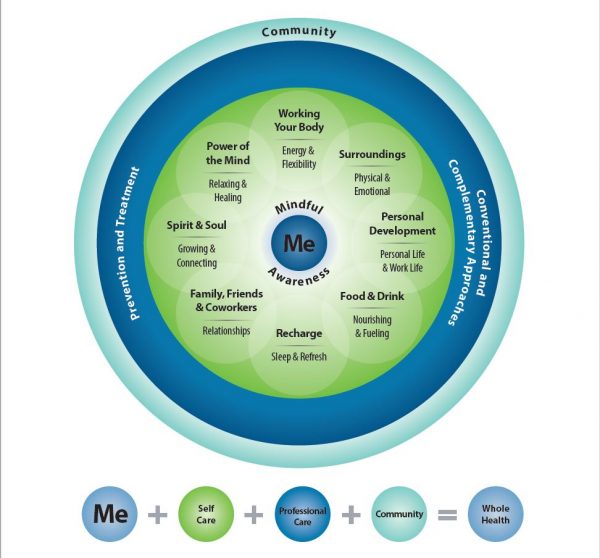
The Whole Health Model
The Whole Health model recognizes the patient as a whole person, not just his diagnosis, illnesses, injuries or disabilities, and also examines the effects manifesting throughout the patient’s body, mind, spirit to enhance the person’s life and total well-being.
Whole Health Team vs. Primary Care Group Education to Promote Nonpharmacological Strategies to Improve Pain, Functioning, and Quality of Life in Veterans (wHope trial)
The overarching goal of the (w)HOPE study is to establish and implement a new Whole Health paradigm for chronic pain care, emphasizing non-pharmacological pain self-management that reduces pain symptoms and improves overall functioning and quality of life in veterans.
Co-Principal Investigators:
Karen Seal, MD and William Becker, MD