Supporting Research in Pain Management for Veterans and Military Service Members

Self-Report Measures

High Impact Chronic Pain Recommendations

High Impact Chronic Pain (HICP) is defined as the presence of pain on at least half of days in the previous 3-6 months with substantial restriction of functional participation in work, social, and self-care activities. HICP is assessed with several questions assessing the duration, frequency, and impact of chronic pain, as well as one question regarding the impact of pain on work. In the PMC3, those who report pain on most days for the past 3 months, and who report that pain limits their life or work activities, are considered to have HICP.

Read More »

Pain Intensity Threshold

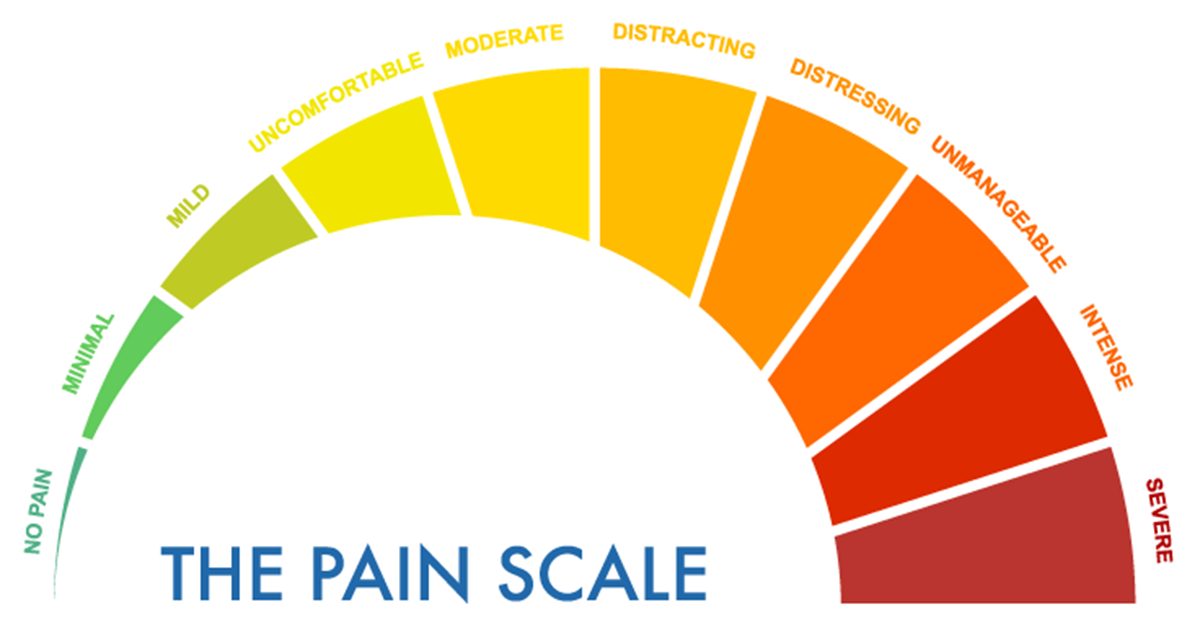
In surveys of patients with chronic pain, pain intensity is described as a critically important dimension of the pain experience and a crucial target of pain treatments (Turk et al., 2008). Moreover, panels of pain experts have suggested that “For most clinical trials of chronic pain treatments, a measure of pain intensity will provide the primary outcome measure.”

Read More »

Pain Chronicity Threshold

The International Association for the Study of Pain and ICD diagnoses of chronic pain use a minimum 3-
month threshold for establishing chronicity. For clinical trials
of treatments for chronic pain, IMMPACT recommends a 6-month minimum for pain duration, which we apply for this instrument.

Read More »

PHQ-2

The Patient Health Questionnaire-2 (PHQ-2) is a widely used, patient-reported, 2-item screening measure for depression.

Read More »

AUDIT-C

The Alcohol Disorders Identification Test-Concise (AUDIT-C) is a brief alcohol use disorder screening instrument that reliably identifies individuals who are at risk for alcohol use disorder (including alcohol abuse or dependence).

Read More »

PEG

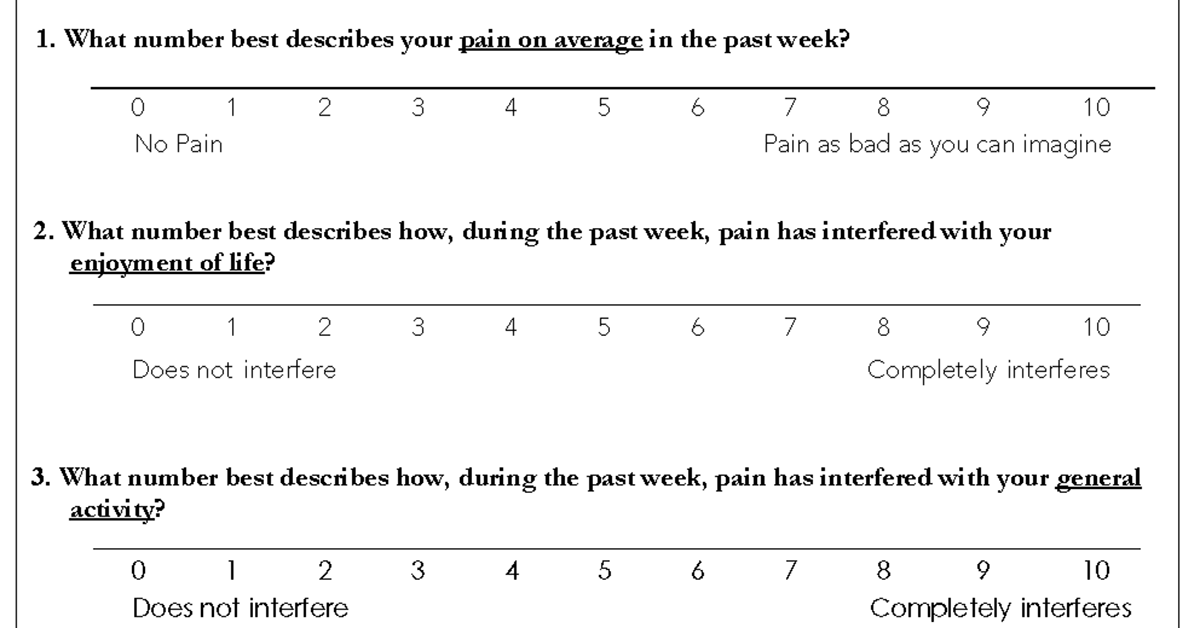
The PEG is a brief, convenient, patient-reported pain outcome measure that is derived from the Brief Pain Inventory.

Read More »